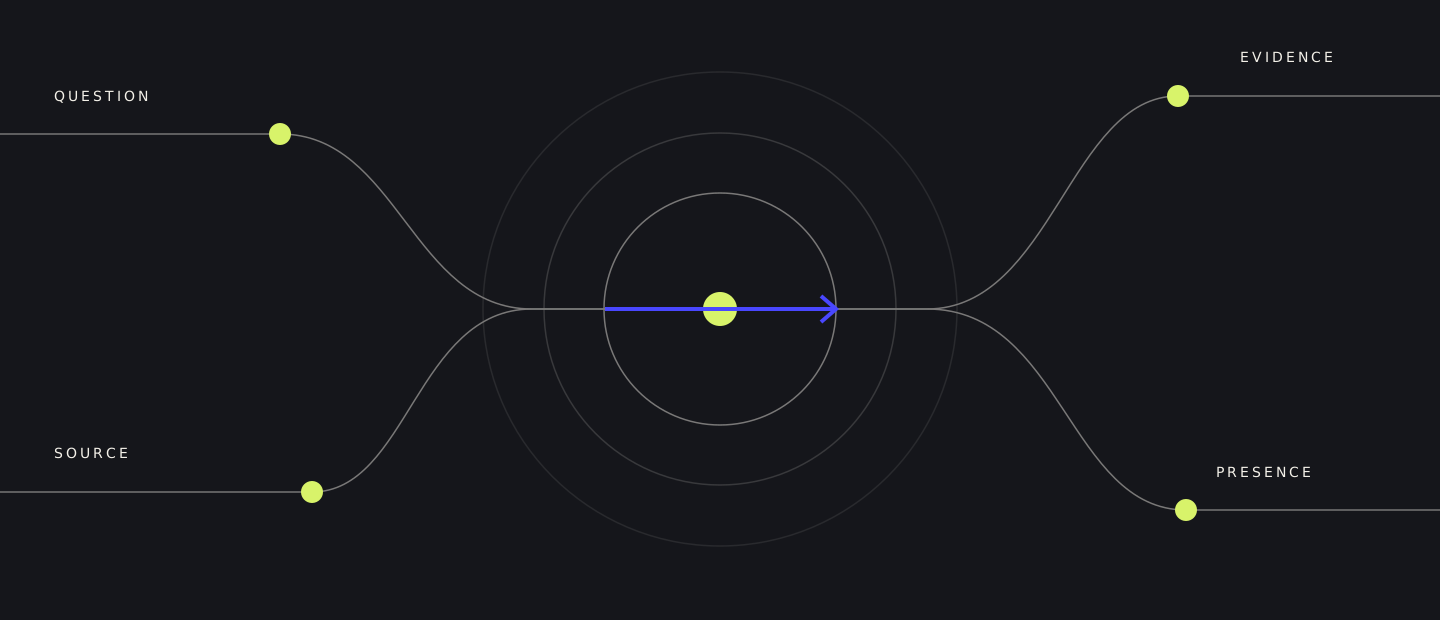
A GEO agency should be able to show you how it gets from an AI answer to a recommendation you can act on. If the sales pitch jumps from a screenshot of ChatGPT to a monthly fee, there’s a conversation missing.
You don’t need a free campaign plan on the first call. You do need to understand what you’re buying. Ask the agency to walk through a finding from a previous assignment, with client details removed if necessary. You’ll learn more from the explanation than from a wall of platform logos.
Follow one recommendation back to its source
Suppose a provider says your business needs coverage on a particular industry website. Why that website? It should be able to show the page it inspected and explain its connection to your customers.
A citation in a relevant AI answer is a reason to investigate. The agency still needs to read the cited page. It might support a product specification without supporting the recommendation itself. Those are different reasons for appearing in the answer, and they call for different work.
The same scrutiny applies to the question used in the test. A logistics software company that serves large warehouse operators shouldn’t pay to appear in recommendations for a freelancer’s parcel-tracking app. A missing mention is only a problem if your company belongs in the answer.
Our GEO audit guide describes the record you should receive. A provider should explain how it chose the questions and keep the results that didn’t support its preferred conclusion.
Find out who’s doing the work
An agency can produce a useful assessment while leaving every implementation task with you. That’s a reasonable service to buy, provided you know it before the invoice arrives.
The proposal should name the person responsible for changing your pages. When outreach is included, it should identify who contacts publishers and who approves the pitch. If the agency uses a delivery partner, you need to know who handles a missed deadline or a factual mistake.
For content changes, agree on the approval process. Your product team may need to check claims before publication. For outside coverage, ask how the agency distinguishes editorial submissions from paid placements. A publisher can turn down an editorial pitch, which affects what the agency can promise to deliver.
When an agency sells links by DR, ask to see the pages and the relevant keywords they rank for. A high score won’t tell you whether the proposed page has anything to do with your market. The links and mentions guide covers that review.
Make the reporting numbers explain themselves
Microsoft’s February 10, 2026 AI Performance announcement describes citation reporting in Bing Webmaster Tools. It explicitly separates citation counts from ranking or placement inside an answer.
That distinction belongs in your agency’s reporting too. A chart of cited pages can’t establish how often your company was recommended, and neither number establishes how many customers you gained.
For a percentage calculated from the agency’s own tests, ask for the underlying counts and the question set. You should be able to see whether the next report used the same sample. Adding easier questions halfway through a campaign can change the percentage without improving your position for the questions you started with.
Compare the proposals line by line
You can use the questions below in a sales call. The answers should end up in the written scope so you can refer to them when the work starts.
- Which part of our business will you investigate, and why?
- What will you hand over at the end of the assessment?
- Who will implement each recommendation?
- Which costs sit outside the quoted fee, including publishing or software costs?
- What files and reporting access will we keep if the engagement ends?
Our GEO services should face the same questions. If you’re comparing GEO Agency with another provider, compare the deliverables and responsibility for implementation alongside the price.
Before signing, put the proposed tasks next to your existing marketing plan. The overlap between GEO and SEO is substantial enough that you may already have someone assigned to part of the work. Give each task one owner and remove the duplicate fee before agreeing to the retainer.