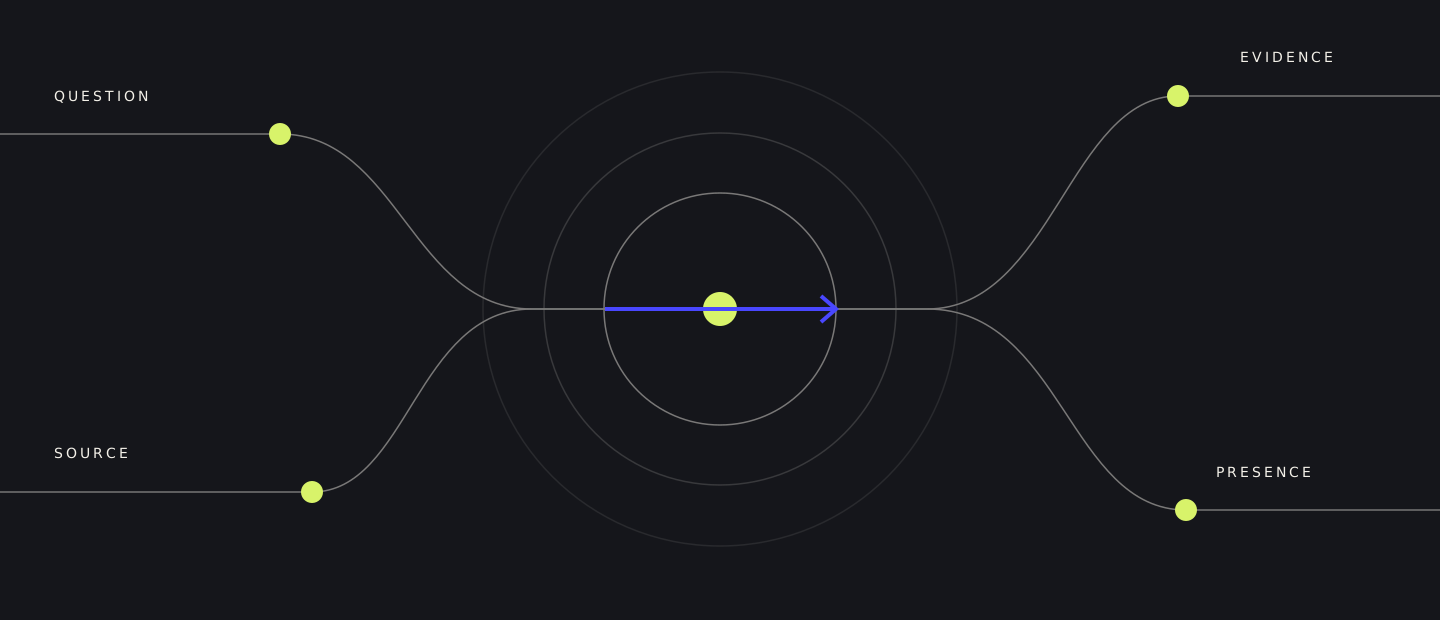
AEO stands for answer engine optimization. GEO stands for generative engine optimization. Providers use both terms for work intended to improve a business’s visibility in AI answers, and the scopes often overlap.
You’ll encounter attempts to draw a precise line between them. Those definitions can be useful within a particular provider’s offer. They don’t tell you what another agency will deliver under the same label.
If you’re buying the work, ask the provider to describe the pages it will change and the evidence it will examine. That conversation is more useful than choosing a side in an acronym argument. Our GEO agency selection guide gives you a worksheet for comparing those answers.
There is a difference in emphasis
AEO often emphasizes making information useful in answer-based search. A provider might focus on clarifying a product explanation or resolving a question that the website currently handles poorly.
GEO often emphasizes how a company appears in generated answers, including the outside sources that influence how the company is described. A provider might investigate why competing brands appear in recommendations and whether relevant information about your company is missing.
Those activities can belong to one engagement. Improving a product page may support a broader effort to make the brand easier to evaluate. Research into outside sources may reveal that the product page contains an outdated fact.
For Google specifically, its current guidance treats optimization for generative search as SEO. Google explains its position here. That doesn’t require every agency to use identical terminology, but it does make sweeping claims of a completely separate technical discipline harder to justify.
Compare a real assignment
Imagine a business selling payroll software to restaurants. It wants to be considered when an owner asks about handling tips across several locations.
The website currently says the product supports restaurant payroll, but it doesn’t explain the workflow. A relevant industry comparison also describes an older version of the product.
One assignment is to create an accurate explanation on the company’s own site. Someone needs to confirm how the current product handles the situation and write content the product team can approve.
Another assignment is to review the outside comparison and determine whether the publisher accepts factual updates. Somebody needs to prepare the correction and handle the communication.
An agency could call this AEO. Another could call it GEO. The business still needs the same work done, with responsibility clearly assigned.
Ask what the provider will observe
Suppose an agency proposes tracking 20 buying questions. Ask why those questions were chosen and which platforms are included. Twenty is an illustrative scope here, not a universal minimum.
Find out whether the agency distinguishes a brand mention from a cited page. Ask how it handles contradictory answers and what happens when the platform produces a different result on the next run.
If the report presents a percentage, ask for the count behind it. You should be able to understand the measurement without adopting the provider’s proprietary vocabulary.
The same standard applies to business outcomes. A provider using either acronym should explain what evidence connects the work to relevant inquiries. Where that evidence is incomplete, the report should say so. A well-scoped GEO audit should record the sample and its limits before drawing conclusions.
Don’t buy duplicate work
If you already have an agency improving content and another one proposes an AEO or GEO program, compare the scopes before signing. The task-by-task approach in our GEO vs. SEO guide helps identify where the proposed work overlaps.
The new provider may add useful source research that nobody is doing. It may also propose rewriting pages already assigned to your existing team. Work out which tasks are additional and which are shared.
For the restaurant-payroll example, your product marketing team may be best placed to write the workflow explanation. An outside specialist could investigate the comparison sources and help define the observation method. That arrangement could be more useful than moving every task into a new retainer.
Choose the work your business can use
Start with the problem you can describe. Buyers might be struggling to find a clear answer about your product. Or a relevant source might keep describing an offer you retired, sending you inquiries your team has to turn away.
Each problem suggests an assignment you can scope and review. Our GEO services explain the work available through this site. When comparing providers, ask them to map their proposed service to your specific problem and identify the person who will complete it. That focus on scope is central to GEO Agency.